


When a pre-filled syringe (PFS) filling machine is exported, voltage and plug compatibility are usually the first checks. Language adaptation is the hidden second barrier. A machine that runs smoothly in a Chinese factory can still create confusion in a German, Dutch, Turkish, Brazilian or Southeast Asian plant if the touchscreen menus, parameter names, alarm messages and operator prompts remain in Chinese. For aseptic filling, where parameter accuracy and response time matter, a language mismatch can be as costly as an electrical mismatch.
Shanghai ALWELL Machinery Equipment Co., Ltd. (brand: ALWELL) has supplied filling equipment to Europe, Southeast Asia, the Middle East, Africa, South America and North America. Operators in these markets work in different languages, and regulatory documents, validation reports, machine nameplates and warning labels often need to be in the destination country's official language or a language specified by the customer. To meet that need, ALWELL has built multilingual customization into the control system, operator interface, technical documentation and labeling system - so the same machine platform can be delivered ready for a specific language environment.
This article explains where language differences affect a PFS filling line, how ALWELL handles each layer, and what buyers should confirm before shipment.
On this page
Why language matters ·
Where language affects the line ·
ALWELL's customization approach ·
Delivery workflow ·
Buyer checklist ·
FAQ
Why Language Adaptation Is a Commissioning Issue, Not a Translation Task
Multilingual customization is often treated as a last-minute document task: translate a few screens, print a manual, and ship the machine. In practice, it is an engineering configuration item. Operators need to read fill parameters, vacuum levels, servo status, alarm codes and step-by-step instructions in a language they use every day. If they cannot, training takes longer, parameter changes are more likely to be wrong, and abnormal events take longer to resolve.
For pharmaceutical and biopharmaceutical production, that risk is amplified. A delayed response to a vacuum deviation or a stoppering fault can affect product quality, batch documentation and line availability. Language adaptation should therefore be specified, reviewed and verified alongside capacity, container format and electrical requirements - not after the machine is built.
Where Language Differences Affect a PFS Filling Machine
The need for localization goes well beyond changing a few buttons on the touchscreen. Four connected areas need attention.
|
Area |
What operators or inspectors need to read |
Risk if only Chinese is provided |
|
HMI interface |
Fill parameters, vacuum level, servo status, recipe names, operation guidance |
Longer training, slower parameter adjustment, higher risk of operator error |
|
Alarms and prompts |
Vacuum deviation, stoppering fault, servo alarm, safety door status |
Slower fault diagnosis and possible escalation of minor faults to downtime |
|
Technical and validation documents |
Manuals, spare parts lists, cleaning/SOPs, DQ/IQ/OQ/PQ templates |
Delayed site acceptance and regulatory review |
|
Labels and markings |
Nameplate, tubing labels, safety warnings, button labels, packaging marks |
Rework during acceptance, longer delivery cycle, extra cost |
HMI and operator interface
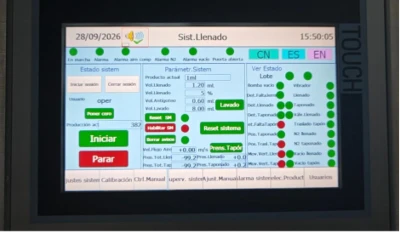
The touchscreen is the most frequently used language layer. On a pre-filled syringe filling machine, it displays filling parameters, vacuum values, servo status, alarm codes and operating instructions. Operators need to call up recipes, make fine parameter adjustments and handle exceptions in a language they understand. If the interface language does not match the operator's working language, training cycles extend and the probability of misoperation rises.
Alarms and prompt messages
When the machine detects a vacuum deviation, a stoppering fault, a servo alarm or an open safety door, the system displays a message. If these messages are available only in Chinese, overseas operators may struggle to judge the nature of the problem, delaying response and sometimes turning a minor issue into a stoppage.
Technical and validation documents
Operation manuals, maintenance manuals, spare parts lists, cleaning and sterilization procedures, and DQ/IQ/OQ/PQ validation templates are usually submitted in the destination country's official language or a customer-specified language. For the EU market, equipment labels, warning signs and accompanying documents also need to meet local language requirements. Incomplete documentation can directly affect site acceptance and regulatory review.
Machine labels and safety markings
Nameplates, tubing identification, safety warnings, button labels and packaging labels are easy to overlook but frequently checked during acceptance. Non-standard labeling can lead to rectification requests, extending the delivery cycle and increasing cost.
How ALWELL Builds Multilingual Customization into the Machine
ALWELL's approach is not to provide a translation file after the fact. Language adaptation is embedded in equipment configuration and the delivery process as an operable, verifiable customization path.
Pre-configured language packs on the HMI
ALWELL machines support language switching on the touchscreen. Before shipment, a language pack can be pre-installed according to the customer's destination market. Operators select the required language after login, and menus, parameter names, status messages and alarm text switch accordingly. The language pack is frozen after customer confirmation to avoid terminology drift caused by on-site edits.
Where several languages coexist - for example, a multinational pharmaceutical plant with operators who speak different mother tongues - the system can keep multiple language configurations and switch them by user permission or login account.
Alarm text reviewed with the customer
During commissioning, ALWELL reviews alarm codes and prompt texts item by item with the customer. Original Chinese messages are translated into the destination language and technical terminology is checked for accuracy. The translation is adapted to industry usage and operating context rather than done word for word, so operators can quickly understand both the problem and the action to take. For critical alarms, the interface can show the alarm code together with a short recommended action, reducing delays caused by language interpretation.
Documents and validation templates in your language
ALWELL can provide operation and maintenance manuals in Chinese, English and customer-specified languages. Validation document templates can be adapted at the cover, table of contents and key instruction level. Where CE marking applies, equipment labels and warning signs are prepared according to local language requirements. After translation, the customer or local agent reviews and confirms the documents so terminology matches local regulatory practice.
Nameplates, labels and packaging markings
Nameplates, button labels, tubing labels and safety warning labels are customized for the destination language environment. Label material and adhesion method are selected according to the machine's surface treatment, so labels do not peel or fade under cleanroom cleaning and disinfection. Packaging labels and accompanying document lists are also prepared in the destination language to make on-site counting and acceptance straightforward.
From Requirement to FAT: The Delivery Workflow
If multilingual customization starts only shortly before shipment, translation, review and interface testing are compressed, increasing the risk of delay or rework. ALWELL moves language requirements forward to the requirement stage, where they are confirmed together with capacity targets, packaging formats and electrical standards.
1. Requirements stage
The customer specifies the destination language, operators' language habits, regulatory document language requirements and whether multiple languages need to coexist. ALWELL's technical team then creates a language configuration list defining which screens need translation, which documents must be submitted and which labels need customization.
2. Design and build stage
Language pack content is confirmed together with the machine configuration. This prevents a common problem: discovering after manufacturing that the interface language cannot match the customer's operating environment.
3. FAT stage
Language configuration is included as a factory acceptance test item. Customers can switch languages during FAT and check interface terminology, alarm information and operation prompts against the approved version. For overseas projects, the language confirmation record is kept with the machine file for quick reference during installation and commissioning. In a Netherlands project, language configuration was confirmed before shipment along with multiple verification tests and packaging protection checks, reducing back-and-forth communication during on-site commissioning.
4. After-sales and software upgrades
Language adaptation remains relevant after delivery. When software is upgraded or process parameters are changed, new interface text and alarm messages must be added to the language pack. ALWELL records the language configuration version in the equipment file, so remote support engineers can identify the current language state and guide updates or switching. For customers with multiple languages, technical support can be provided in the customer-specified language, reducing communication cost caused by language differences.
Buyer's Checklist: What to Put in the Technical Agreement
For pharmaceutical companies purchasing export-oriented filling equipment, language customization should be a verifiable clause in the technical agreement. Buyers are advised to specify:
- Language of the HMI interface and login-based switching rules
- Language of alarm codes, prompt texts and recommended actions
- Language of operation manuals, maintenance manuals and spare parts lists
- Language scope of cleaning/sterilization procedures and SOPs
- Language of DQ/IQ/OQ/PQ validation templates and batch records
- Language of nameplates, tubing labels, button marks and safety warnings
- Whether multiple language packs must coexist and how users switch between them
- FAT demonstration and terminology confirmation records
- Responsibility and timeline for language pack updates after software upgrades
For lines serving multiple countries, requiring pre-installed language packs and on-site switching avoids the cost of configuring a separate machine for every language.
Frequently Asked Questions
Q: Which languages can the HMI support?
A: The system supports pre-installed language packs for the destination market. Common options include English, German, Spanish, Portuguese, French, Turkish, Thai and other languages confirmed with the customer before shipment.
Q: Can one machine switch between languages on site?
A: Yes. Where multiple language packs are installed, operators can switch by login account or permission level. This is useful for plants with multilingual operating teams.
Q: Are validation documents translated as well?
A: Yes. Operation and maintenance manuals, spare parts lists, cleaning procedures and DQ/IQ/OQ/PQ template content can be prepared in the customer-specified language and reviewed by the customer or local agent.
Q: How are alarm messages handled?
A: Alarm codes and prompt texts are reviewed item by item during commissioning. Technical terms are adapted to industry usage, and critical alarms can display a short recommended action alongside the code.
Q: Can labels and warning signs meet EU language requirements?
A: Where CE marking applies, nameplates, warning labels and accompanying documents can be prepared according to the destination language requirements. Label materials are selected for cleanroom cleaning and disinfection conditions.
Q: When should we confirm the language scope?
A: At the requirement stage, before machine design is finalized. Confirming early allows language pack content, documents and labels to be built into the project plan rather than added before shipment.
Ready to Localize Your PFS Line?
Language adaptation is what makes a PFS filling machine truly operable at its destination. ALWELL turns language requirements from a pre-shipment translation task into a configurable, verifiable and traceable engineering item - covering touchscreen interfaces, alarm prompts, technical documents and equipment labels.
If you are planning a pre-filled syringe filling project for an overseas market, tell us your destination country, operator languages and document requirements. Our engineering team will prepare a language configuration list together with your machine proposal.