


In pharmaceutical and dental gel manufacturing, the boundary between a successful batch and a costly recall often comes down to the state of your filling pumps. Whether you are dealing with high-value biologics or high-viscosity dental whitening gels, "just pouring water" through the system is never enough.
Effective flushing is the guardian of your ±1% dosing accuracy. Here is how we ensure every machine we manufacture maintains its peak performance.
Part 1: Why "Flushing" is More Than Just Cleaning (The "Why")
A syringe pump is a precision instrument, not just a mechanical mover. Rigorous flushing serves three critical goals:
Eliminating Cross-Contamination: When switching from a chitosan-based product to a dental whitening gel, even a micro-gram of residue can compromise the chemical stability and safety of the next batch.
Protecting Your High-Precision Pistons: Many injectable liquids crystallize when dry. These micro-crystals act like sandpaper on ceramic or 316L stainless steel pistons, causing abrasive wear that quickly degrades your accuracy from ±1% to ±5%
Maximizing Equipment ROI: Regular, professional cleaning prevents seal hardening and valve sticking, significantly reducing unplanned downtime and maintenance costs.
Part 2: Step-by-Step Operational Guide (The Engineer's Way)
Follow this 5-step sequence to ensure your system is truly clean, not just "wet."
1.Empty the System Entirely
Run the pump in "Discharge Mode" via the HMI. Ensure the buffer tank and all manifolds are gravity-drained. Don't let high-value bulk liquid sit in the tubes-get it out before introducing the flush.
2.Initial Warm Water Rinse
Use purified water heated to 40°C - 50°C. Cycle the water through the pump for at least 5 minutes. The warmth helps lower the surface tension of any clinging product, making it much easier to displace.
3.Targeted Chemical Cleaning (Optional)
If handling oil-based or high-viscosity materials, introduce a 1-2% alkaline cleaning agent. Note: Ensure all chemicals are compatible with AISI 316L stainless steel to prevent pitting or corrosion.
4.The Final Flush (WFI / Purified Water)
Perform the final rinse with Water for Injection (WFI) or deionized water. Continue until the conductivity at the outlet matches the inlet, proving there are no chemical traces left behind.
5.Drying & Micro-Inspection
Use oil-free nitrogen or compressed air to blow through the filling needles. Inspect the seals specifically for "hanging drops" or tackiness. A clean pump should look dry and mirror-smooth.
Part 3: Expert Tips for Challenging Materials
Different products require different tactics. Here is the "insider" knowledge
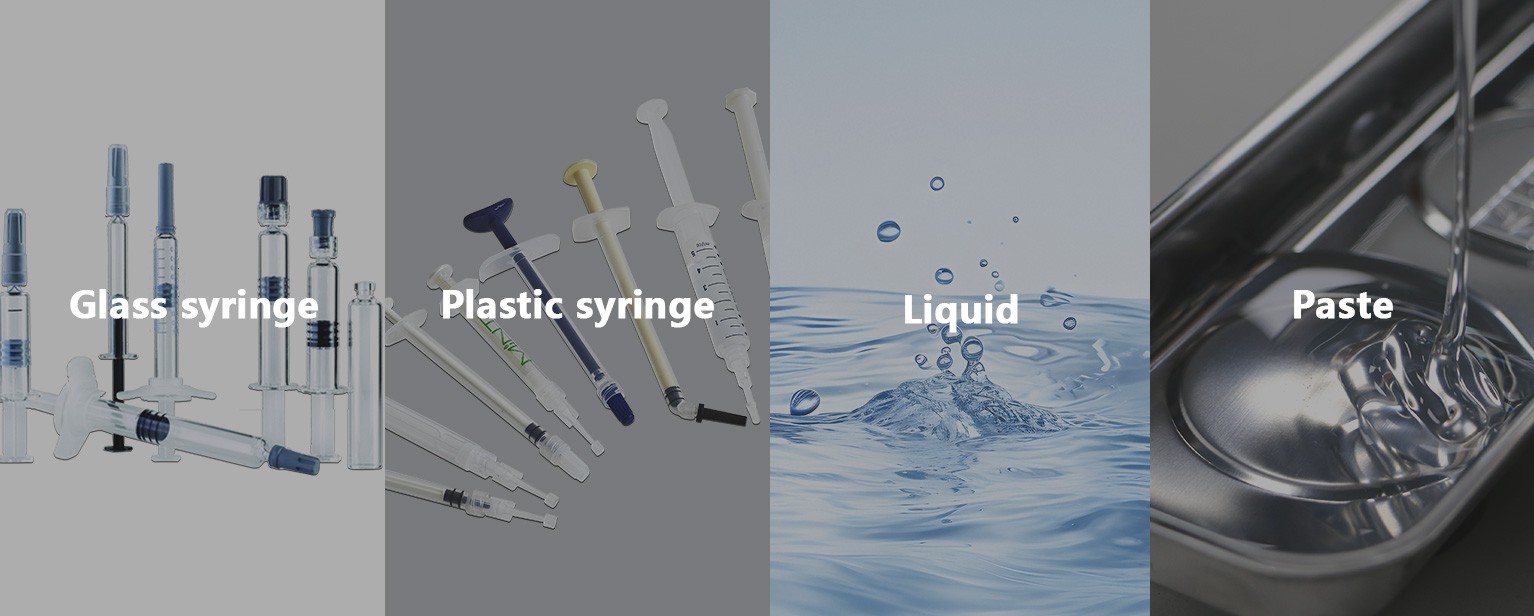
For High-Viscosity Gels (Dental/Hyaluronic Acid): Increase your initial rinse water temperature to 60°C. This "thermal thinning" breaks the molecular bond of the gel to the stainless steel walls, allowing the flush to sweep it away rather than just flowing over it.
For Crystallizing Medications: Pay extra attention to the filling needle tips. Micro-crystals often form here first; if not cleared, they can be pulled back into the pump, scratching the precision-honed cylinder during the next cycle.
Leverage CIP/SIP Integration: If your production line is equipped with our Clean-in-Place (CIP) or Steam-in-Place (SIP) system, utilize the automated cycles. Our pumps are designed with "Zero Dead Corner" geometry, ensuring that the steam or cleaning fluid reaches every micron of the product-contact surface.
Summary: Precision Starts with Purity
At our facility, we polish all internal pump surfaces to Ra < 0.4μm. This mirror-finish isn't just for looks-it creates a microscopic environment where residues have nothing to grab onto. This engineering detail reduces your required flushing time by 30% and simplifies your validation process.
Need a customized flushing protocol for your specific product? Our engineers are ready to help you optimize your filling precision.