


1. Industry Pain Points and Technical Challenges
Biopharmaceutical manufacturers encounter three primary obstacles during automated syringe filling operations:
Aseptic Environmental Control: Even microscopic contamination during fluid transfer can compromise an entire production batch. This places extreme pressure on machine sealing mechanics and sanitary material selection.
Volumetric Accuracy Management: Micro-dose filling (spanning 1ml to 20ml formats) requires a strict dosing tolerance within ±1%, alongside a consistent stoppering success rate of ≥99.9%.
Packaging Rigidity and Operational Waste: Legacy filling systems are typically restricted to a single packaging type. When a facility needs to process pre-filled syringes (PFS), cartridges, and vials simultaneously, they are forced to invest in multiple standalone lines-resulting in severe capital expenditures and wasted cleanroom square footage.
To address these vulnerabilities, Vacuum Filling Technology has emerged as the definitive standard for bubble elimination. By executing fluid injection under precise negative pressure, the system completely evacuates residual air from the syringe barrel, securing biological product stability and consistent fill volumes. Concurrently, the adoption of Ready-to-Use (RTU) nested packaging offers a streamlined operational pathway to maximize throughput while minimizing bioburden risks.
2. Technical Breakthroughs of the ALWELL Universal RTU Filling Platform
Within the sterile filling segment, the Nested RTU Vacuum Filling and Stoppering Machine developed by ALWELL represents a major technological leap forward. The core value of this platform lies in its high-compatibility, integrated architecture: a single master system seamlessly handles nested syringes, cartridges, and vials on a unified 3-in-1 combo base unit. This enables drug manufacturers to drastically cut capital equipment procurement costs and reduce overall cleanroom maintenance overhead.
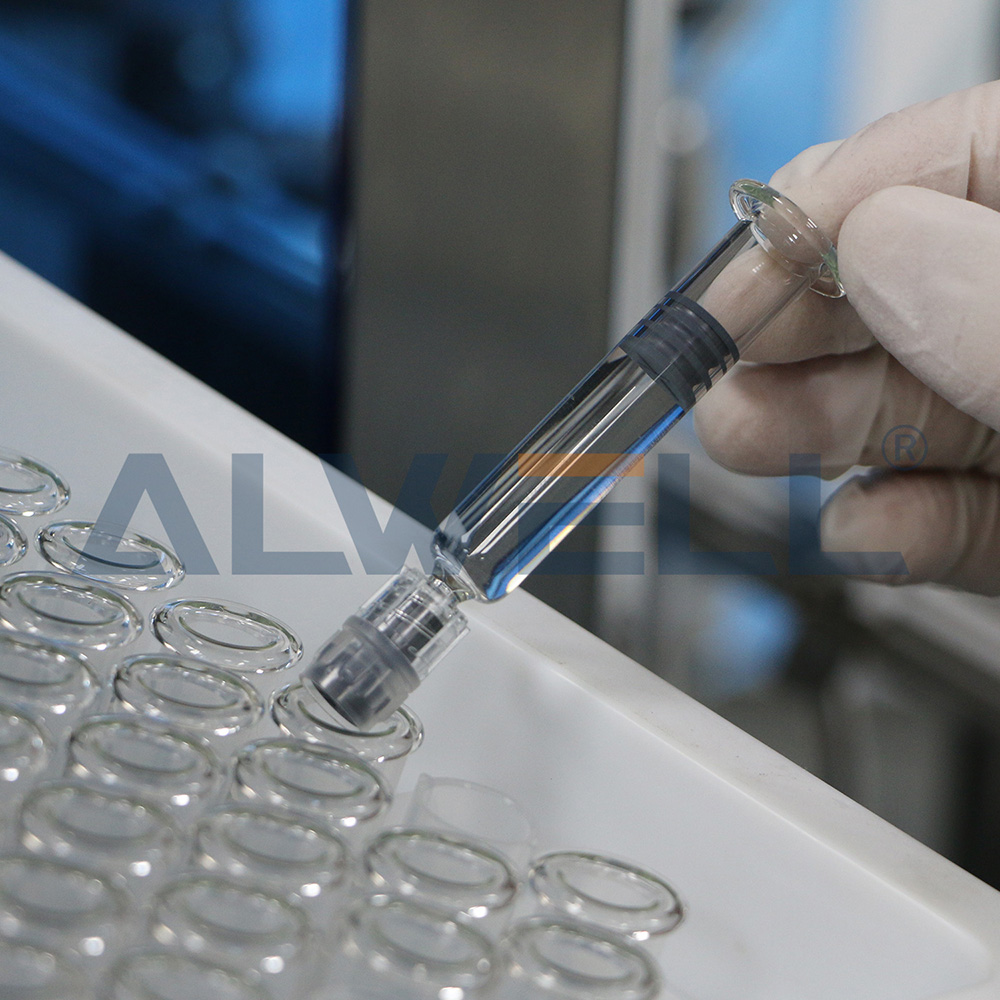
Core Engineering Architecture & Performance Metrics:
Full Servo Integration: The entire kinematic sequence is synchronized via a high-performance servo control system, working in tandem with a vacuum-sealed, dual-stage lifting mechanism to execute filling under strict negative pressure. This configuration prevents dripping and ensures bubble-free sealing in high-viscosity gels.
High-Precision Execution: Real-world production data confirms a stable dosing accuracy within ±1% and a stoppering yield rate of ≥99.9%.
Scalable Output: The system delivers flexible throughput configurations ranging from 1,500 to 11,000 units per hour, easily adapting to clinical trials or high-volume commercial runs.
Optimized Cleanroom Footprint: Unlike traditional, sprawling filling lines that consume hundreds of square meters, ALWELL utilizes a compact, modular layout. This allows effortless integration into restricted high-grade isolation spaces (Isolators/RABS).
Intelligent HMI Control: Equipped with a high-definition Siemens HMI touchscreen paired with a Schneider PLC control backend, the platform features an intuitive UI that shortens operator training cycles while providing real-time data logging and comprehensive audit trails.
3. Compliance, Material Standards, and Regulatory Safety
Sterile manufacturing requires strict adherence to international sanitary guidelines. Across ALWELL's pre-filled syringe flushing lines and sterile vial filling networks, all product-contact parts are constructed from 316L stainless steel and medical-grade silicone. These materials align completely with global cGMP and FDA validation requirements, offering superior corrosion resistance and chemical inertness to eliminate the risk of extractables or leachable migration.
From an end-to-end perspective, downstream automation tracking is vital for product integrity. The primary filling cell integrates seamlessly with:
Automated Vision Inspection Systems (AVI / Inspection Machines): For real-time particle and cosmetic defect detection.
Plunger Rod Insertion & Labeling Modules: For precise plunger assembly and automated label wrapping.
This seamless, full-line integration achieves hands-free automation from initial liquid filling to final secondary packaging, eliminating human intervention and mitigating cleanroom cross-contamination risks.
4. IP Protection and International Validation
Continuous technical innovation must be backed by a strong intellectual property framework. ALWELL maintains a robust patent portfolio in the vacuum filling sector, including our proprietary "Bubble-Free Vacuum Filling Apparatus for Syringes" utility patent (Filed: February 1, 2024). This specialized technology creates an engineering barrier against micro-bubble defects in high-viscosity biologicals.
Furthermore, ALWELL's manufacturing ecosystem is governed by an ISO 9001 Quality Management System and fully complies with European CE Safety Directives. This global compliance framework has enabled ALWELL to deploy sterile filling machinery across highly regulated markets, including Europe, North America, the Middle East, and Southeast Asia-cementing its position as a trusted partner in the global PFS filling sector.
5. Engineering Expertise and Custom Turnkey Lifecycle Support
Equipment reliability relies heavily on the engineering team behind it. ALWELL's technical department brings together specialists in advanced mechanical structure design, automated control logic, and aseptic processing. Leveraging advanced software like SolidWorks and AutoCAD, alongside integrated Schneider and Siemens architectures, our team delivers complete lifecycle support-from standalone machine engineering to complex facility-wide layout planning.
To maintain innovation stability, ALWELL runs a structured engineering hierarchy (comprising Mid-Level Engineers, Senior Engineers, and Technical Directors). This ensures continuous R&D tracking of industry-wide technical shifts, allowing us to respond rapidly to client-specific customization requests and shifting international standards.
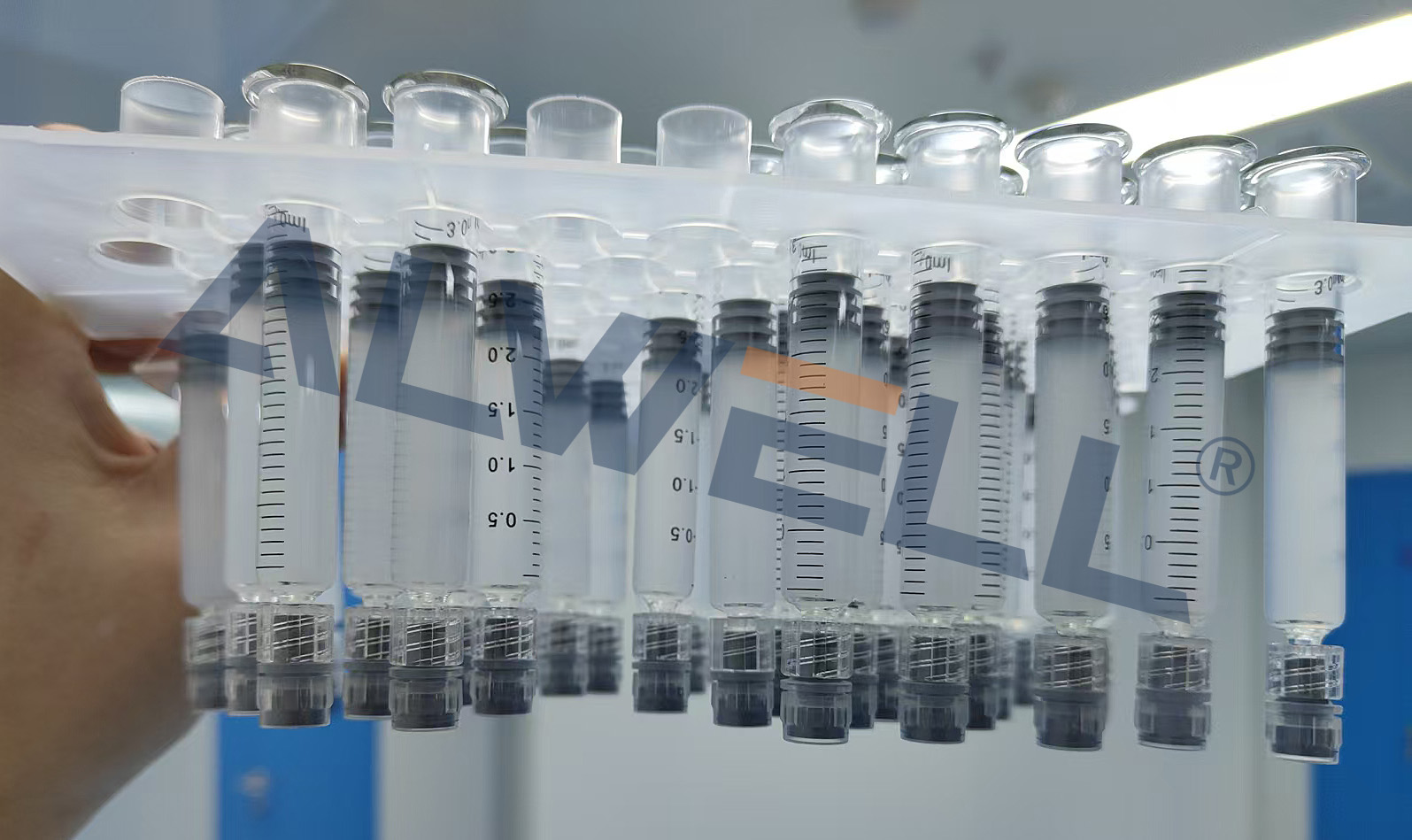
Procurement Guide: Strategic Procurement Selection Criteria
When evaluating syringe filling infrastructure, pharmaceutical engineering teams must look beyond initial asset pricing and consider five core pillars:
| Selection Criteria | Key Operational Metrics | Long-Term Strategic Value |
| Technical Flexibility | Multi-format RTU support (Syringes, Vials, Cartridges) | Minimizes future lines restructuring expenses if drug pipelines change. |
| Dosing Stability | ±1% volumetric tolerance over extended batches | Drives down product reject rates and maximizes high-value API utilization. |
| Spatial Efficiency | Ultra-compact, modular footprint | Reduces expensive Class A / Grade A cleanroom construction overhead. |
| Compliance Integrity | Traceable DQ, IQ, OQ, PQ documentation packages | Accelerates FDA validation cycles and simplifies global regulatory audits. |
| Lifecycle Support | Rapid technical service and single-source full-line planning | Shortens line commissioning windows and secures optimal OEE metrics. |
The Domestic Advantage
Modern domestic equipment suppliers have closed the gap on traditional Western machinery. Top-tier providers like ALWELL deliver comparable international performance metrics and exceptional structural builds, backed by significantly shorter delivery lead times and agile, highly responsive customization services.
7. Future Technology Trajectories
As the biopharmaceutical landscape shifts, automated filling infrastructure must evolve along three critical vectors:
Intelligent Digitalization: Future platforms will increasingly feature advanced predictive maintenance sensors and cloud-based IoT data loops, enabling automated quality tracking and proactive downtime prevention.
Ultimate Operational Agility: Market demands for specialized, small-batch personalized medicines are forcing machinery toward tool-less, ultra-fast changeovers across diverse container sizes.
Next-Gen Sustainability: Stricter environmental mandates require automated lines to reduce energy consumption and minimize product reject waste without compromising sterile security.

Conclusion
Selecting a sterile filling vendor is an investment in your drug's time-to-market. Drug manufacturers must choose partners backed by continuous R&D pipelines, international validation credentials, and a proven track record in high-precision fluid engineering. The mature application of RTU nested filling tech is redefining efficiency benchmarks across the life sciences-providing a reliable foundation for high-quality, globally compliant pharmaceutical manufacturing.