


In the pharmaceutical and biopharmaceutical manufacturing chain, the prefilled syringe vacuum filling machine plays a critical role in accurately dosing liquid medications into syringes and securing them with rubber stoppers. By integrating vacuum technology, this specialized equipment combines dosing and stoppering into a unified process-minimizing air contact and streamlining line operations.
However, a vacuum filling machine is not an isolated, standalone enclosure. To achieve reliable aseptic processing, it must operate in tight technical synergy with a controlled cleanroom environment.
1. The Operational Logic of Vacuum Filling and Environmental Dependencies
During prefilled syringe processing, sterile barrels enter the filling zone following washing and depyrogenation. High-precision ceramic or peristaltic pumps deliver the liquid product into the barrels. The filled syringes then move directly into a vacuum chamber for stopper insertion.
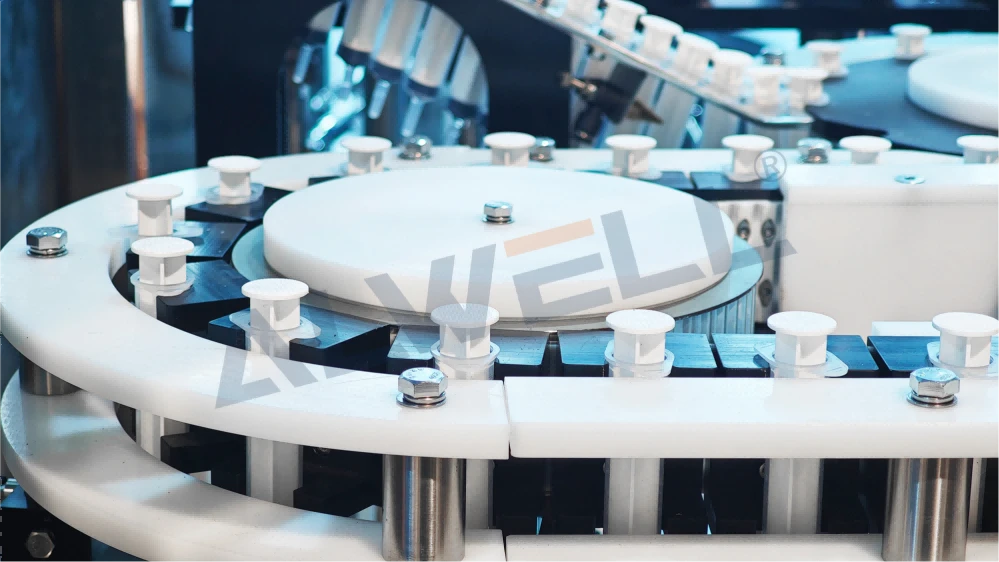
Inside the sealed chamber, the system draws a vacuum to evacuate air above the liquid column before pressing the stopper into place. This simultaneous degassing and sealing mechanism eliminates air bounce, fill-level fluctuations, and headspace bubbles-a vital advantage for oxygen-sensitive biologics, vaccines, and complex formulations.
Because the syringe opening remains exposed before stoppering, environmental cleanliness directly dictates contamination risk. The critical filling point typically operates under an ISO 5 (Grade A) unidirectional laminar airflow hood. Vertical laminar air sweeps away airborne particles and microorganisms at velocities of 0.45 ± 0.1 m/s, maintaining a sterile envelope at the point of fill. Without a compliant cleanroom background, even a high-performance vacuum filling machine cannot prevent particulate or microbial contamination from ambient air.
2. Technical Cleanroom Requirements for Aseptic Filling Lines
A vacuum filling machine relies on specific cleanroom metrics, including cleanliness classification, differential pressure gradients, and airflow patterns:
- Air Cleanliness Standards: The Grade A core area maintains strict dynamic limits (≤ 3,520 particles/m³ for ≥ 0.5 µm particles; < 1 CFU/m³ for airborne microbes). The surrounding Grade B background area enforces dynamic limits of ≤ 352,000 particles/m³ for ≥ 0.5 µm particles.
- Differential Pressure Gradients: Positive pressure gradients (minimum 10 Pa relative to corridors and 5 Pa between adjacent cleanroom grades) prevent dirty air backflow into critical processing zones. Background Grade B areas typically require ≥ 60 air changes per hour (ACPH) to continuously dilute particulates.
- Environmental Monitoring (EM): Continuous online particle counters track 0.5 µm and 5.0 µm particle concentrations, supported by active air samplers, settle plates, and pressure differential alarms.
3. Isolation and Automation Technology: Optimizing Machine-Environment Interaction
To minimize human-derived contamination-the leading source of cleanroom risk-modern filling lines integrate Isolators or Restricted Access Barrier Systems (RABS):
- Isolators: Physical barriers completely separate operators from the processing zone. Combined with Vaporized Hydrogen Peroxide (VHP) decontamination cycles, isolators achieve a 6-log bioburden reduction. When housed inside an isolator, the surrounding background cleanroom classification can often be reduced to Grade D.
- RABS: Maintains a Grade A dynamic environment within a Grade B background, utilizing glove ports and rapid transfer ports (RTP) for controlled interventions.
In addition, robotic automation-such as ultra-clean robotic arms for container handling-eliminates manual contact from tub handling to final stoppering. Equipment design also reflects cleanroom compatibility: flush wall-mounting saves floor space, 316L stainless steel surfaces withstand harsh disinfectants, and minimized mechanical crevices prevent particle accumulation.
4. Continuous Validation and Maintenance Operations
The interaction between a vacuum filling machine and its cleanroom environment requires systematic validation. Following installation, comprehensive Installation Qualification (IQ), Operational Qualification (OQ), and Performance Qualification (PQ) confirm dosing accuracy, sterility assurance (media fills), and process stability under both static and dynamic conditions.
Routine maintenance protocols ensure ongoing compliance:
- Regular calibration of dosing pump strokes.
- Continuous bowl feeder monitoring for stopper supply consistency.
- Clean-in-Place (CIP) and Sterilization-in-Place (SIP) execution between production batches.
- Periodic integrity checks on seals, gaskets, and mechanical dead-legs.
Conclusion
The high-efficiency operation of a prefilled syringe vacuum filling machine depends entirely on a stable, controlled cleanroom environment. While advanced vacuum technology solves critical gas bubble and oxidation challenges during dosing, the cleanroom infrastructure provides an essential barrier against airborne particulates and microorganisms. Investing in the synergy between your vacuum filling machine and cleanroom environment is the ultimate foundation for consistent, compliant aseptic pharmaceutical production.