

Suction plays a pivotal and multi - faceted role in a liquid filling syringe, a product that we, as a liquid filling syringe supplier, are deeply familiar with. In this blog, we will delve into the various aspects of how suction functions within a liquid filling syringe and its significance in the overall liquid - filling process.
Understanding the Basics of Suction in Liquid Filling Syringes
At its core, suction is the process of creating a pressure difference to draw in a liquid. In a liquid filling syringe, this is typically accomplished by retracting the plunger. When the plunger is pulled back, the volume inside the syringe barrel increases. According to Boyle's law, which states that for a given mass of an ideal gas at constant temperature, the pressure and volume are inversely proportional (P1V1 = P2V2), the pressure inside the syringe decreases. This lower pressure compared to the pressure outside (usually atmospheric pressure) creates a pressure gradient. As a result, the liquid is forced into the syringe barrel through the needle or the filling port to equalize the pressure.
This basic principle of suction is fundamental to the operation of liquid filling syringes. It allows for the accurate and controlled intake of liquids, whether it is a small amount for laboratory testing or a larger volume for industrial applications.
Precision in Filling
One of the most significant roles of suction in a liquid filling syringe is enabling precise filling. In many industries, such as the pharmaceutical and biotechnology sectors, accurate dosing is crucial. A slight deviation in the amount of liquid filled can have serious consequences, from ineffective medical treatments to inaccurate experimental results.
The suction mechanism in our liquid filling syringes is designed to provide high - precision filling. By carefully controlling the movement of the plunger, we can ensure that the exact volume of liquid is drawn into the syringe. For example, in the production of pre - filled syringes for injectable drugs, our syringes can achieve filling accuracies within a very narrow margin. This precision is achieved through a combination of high - quality manufacturing of the syringe components, such as the smooth - walled barrel and the precisely - machined plunger, and the use of advanced control systems that regulate the suction process.
Contamination Prevention
Suction also plays a vital role in preventing contamination during the liquid - filling process. In a well - designed liquid filling syringe, the suction action draws the liquid directly from the source into the syringe barrel without exposing it to the external environment. This is especially important in industries where sterility is of utmost importance, such as the pharmaceutical industry.
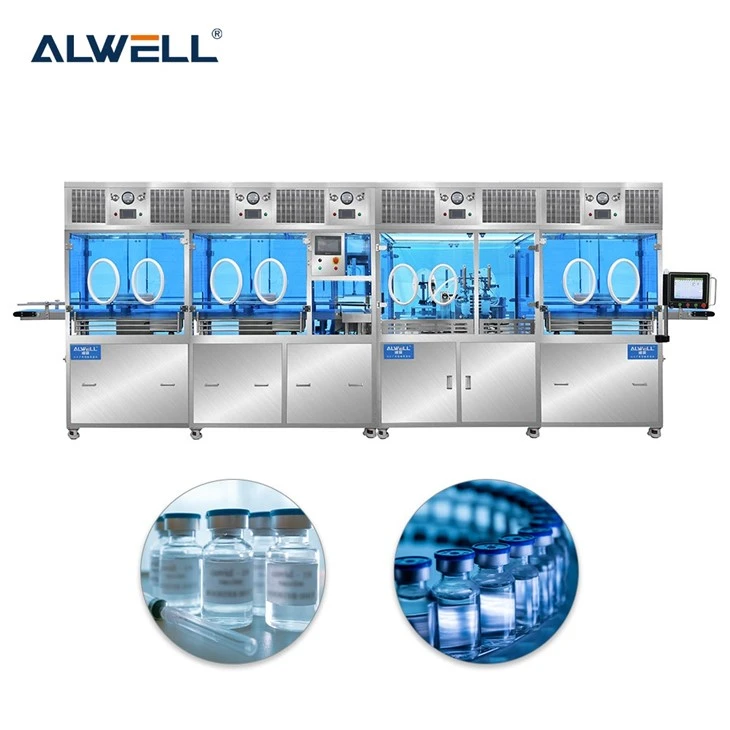
Our liquid filling syringes are equipped with features that enhance contamination prevention. For instance, the needles or filling ports are designed to minimize the risk of introducing foreign particles. Additionally, the suction process can be carried out in a controlled environment, and the syringes can be used in conjunction with Pre - filled Syringe Vacuum Filling And Plugging Machine which further reduces the chances of contamination. These machines can create a vacuum environment during the filling process, which not only aids in the efficient suction of the liquid but also helps to remove any air bubbles that could potentially introduce contaminants.
Compatibility with Different Liquids
Another important aspect of the suction role in liquid filling syringes is their compatibility with a wide range of liquids. Different liquids have different viscosities, surface tensions, and chemical properties. Our liquid filling syringes are designed to handle these variations effectively.
For highly viscous liquids, such as oils or thick gels, the suction mechanism needs to generate sufficient force to draw the liquid into the syringe. Our syringes are engineered with powerful suction capabilities, which can overcome the resistance offered by viscous liquids. On the other hand, for volatile or corrosive liquids, the materials used in the syringe construction are carefully selected to ensure compatibility. The suction process can be optimized to handle these special liquids, minimizing the risk of damage to the syringe and ensuring accurate filling.
Automation and Efficiency
In modern industrial settings, automation is key to achieving high - volume production with consistent quality. Suction in liquid filling syringes can be integrated into automated filling systems. Our liquid filling syringes can be easily incorporated into these systems, which can perform multiple filling cycles with minimal human intervention.
Automated liquid filling systems use sensors and control algorithms to precisely control the suction process. This not only improves the efficiency of the filling process but also reduces the chances of errors. For example, these systems can detect the level of liquid in the syringe and stop the suction process once the desired volume is reached. Additionally, they can work in tandem with Liquid Filling Machine Pharmaceutical to ensure continuous and reliable filling operations.
Labeling and Post - Filling Processes
After the liquid is filled into the syringe, the next step often involves labeling. Suction in liquid filling syringes is indirectly related to this process. Once the syringe is filled accurately, it can be seamlessly transferred to a Syringe Labeller without any issues.
A well - filled syringe with no excess liquid or air bubbles provides an ideal surface for labeling. The suction process that ensures precise filling contributes to the overall success of the labeling process. Labels can be applied accurately and securely, providing important information such as product name, dosage, and expiration date.
Conclusion
In conclusion, suction is an essential element in the operation of liquid filling syringes. It enables precise filling, prevents contamination, ensures compatibility with different liquids, facilitates automation and efficiency, and supports post - filling processes such as labeling. As a leading liquid filling syringe supplier, we are committed to constantly improving the suction technology in our products to meet the evolving needs of our customers.
If you are interested in our liquid filling syringes or have any questions about our products, we invite you to contact us for further discussions and potential procurement. Our team of experts is ready to provide you with detailed information and solutions tailored to your specific requirements.
References
- Smith, J. (2018). Principles of Liquid Filling Technology. Elsevier.
- Johnson, A. (2019). Advances in Pharmaceutical Filling Systems. Springer.