

The volume capacity of a liquid filling syringe is a critical factor in numerous industries, from pharmaceuticals to food and beverage. As a reliable liquid filling syringe supplier, we've witnessed firsthand the diverse requirements for different applications and the importance of understanding the maximum volume a syringe can hold.
Understanding Different Types of Syringes
There are broadly two categories of syringes in the context of liquid filling: disposable and reusable. Disposable syringes are commonly used in medical settings, especially for injections and vaccinations. These are typically made of plastic and are designed for single - use to prevent cross - contamination. The maximum volume of disposable syringes can range from as small as 0.1 mL, often used for insulin injections, to 60 mL for larger volume applications such as irrigation.
Reusable syringes, on the other hand, are usually made of glass or high - quality plastics and are used in laboratory settings, industrial applications, and some medical procedures where cost - efficiency and long - term use are priorities. Reusable syringes can have much larger capacities. Some industrial - grade reusable syringes can hold up to 500 mL or even more, depending on the design and intended use.
Factors Affecting the Maximum Volume
Several factors influence the maximum volume a liquid filling syringe can hold.
1. Material and Design
The material of the syringe plays a significant role. For instance, plastic syringes are generally lighter and more cost - effective, but they may have limitations in terms of the maximum volume they can safely contain. As the volume increases, the structural integrity of the plastic may be compromised, leading to potential leakage or breakage. Glass syringes, on the other hand, offer better strength and chemical resistance, allowing for larger volumes.
The design of the syringe also matters. The shape of the barrel, the thickness of the walls, and the connection between the barrel and the plunger all affect the capacity. A well - designed syringe with thick walls and a secure plunger connection can hold a larger volume without leakage or loss of performance.
2. Application Requirements
Different applications demand different syringe volumes. In the pharmaceutical industry, small - volume syringes are often used for precise dosing of medications. For example, a vaccine may require a very specific and small dose, typically between 0.5 mL to 1 mL. In contrast, in the food and beverage industry, larger - volume syringes may be used for filling containers with sauces, syrups, or other liquid products. A food - grade syringe used for filling bottles of salad dressing might have a capacity of 250 mL or more.

3. Pressure and Flow Rate
The pressure exerted on the liquid inside the syringe and the required flow rate also impact the maximum volume. When dispensing a large volume of liquid, higher pressure may be needed to push the liquid out of the syringe. This requires the syringe to be designed to withstand the pressure without deforming. If the pressure is too high for the syringe's design, it can lead to explosion or bursting. Similarly, the flow rate needs to be considered. A high flow rate may necessitate a larger - bore syringe, which in turn can affect the maximum volume capacity.
Industry - Specific Volume Requirements
Let's take a closer look at some specific industries and their typical syringe volume needs.
Pharmaceutical Industry
As mentioned earlier, the pharmaceutical industry often deals with small, precise doses. The range of syringe volumes in this industry is quite wide, from very small insulin syringes (0.1 - 1 mL) to pre - filled syringes for larger medications. Pre - filled syringes for autoimmune diseases or hormonal therapies may have capacities of 10 - 50 mL. These syringes need to be extremely accurate in their dosing to ensure patient safety and efficacy of the treatment.
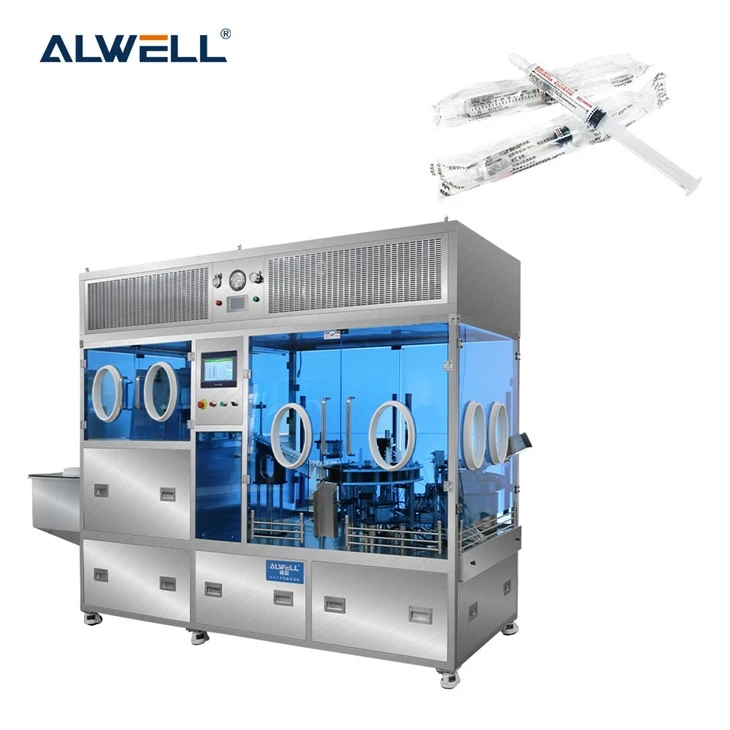
If you are in the pharmaceutical industry and looking for state - of - the - art filling solutions, we recommend our High - speed Pre - filled Filling Machine Liquid Medicine Vacuum Syringe Filling Systems. This system is designed to handle a wide range of syringe volumes with high precision and speed.
Medical and Dental Industry
In addition to the pharmaceutical aspects, the medical and dental industries have other syringe - related needs. Dental syringes are used for injecting local anesthetics, and they usually have a capacity of 1.8 - 2.2 mL. Medical syringes for procedures such as wound irrigation or suction may have larger capacities, ranging from 30 mL to 60 mL.
Food and Beverage Industry
In the food and beverage sector, the volume requirements are generally larger. Syringes are used for filling small bottles, tubes, or containers with various liquid products. For example, a syringe used for filling containers of honey or mustard may have a capacity of 100 - 500 mL. We also offer Sodium Chloride Pre - potting Catheter automatic syringe filling machine which can be customized for different volume requirements in this industry.
Cosmetics and Personal Care Industry
This industry uses syringes for dispensing creams, serums, and other liquid or semi - liquid products. The volume of syringes in this sector can vary from 5 mL for small sample vials to 100 mL for larger consumer - size containers. Our Filling Capping And Labeling Machine For Syringe is an ideal choice for companies in the cosmetics and personal care industry, as it can handle different syringe volumes and perform multiple functions in one integrated system.
Selecting the Right Syringe Volume
When choosing the right syringe volume for your application, it's essential to consider the following steps:
-
Define Your Application
Understand the exact purpose of the syringe. Is it for precise dosing, large - scale filling, or something else? This will help you narrow down the possible volume range. -
Evaluate the Liquid Properties
The properties of the liquid, such as viscosity, density, and chemical reactivity, can affect the choice of syringe. High - viscosity liquids may require larger - bore syringes and may limit the maximum volume that can be effectively dispensed. -
Consider the Production Scale
If you are in a high - volume production environment, you may need to choose a syringe with a larger capacity to increase efficiency. However, if you are producing small batches or need high precision, a smaller - volume syringe may be more suitable. -
As a leading liquid filling syringe supplier, we are committed to providing high - quality syringes and filling solutions to meet your specific needs. Whether you are in the pharmaceutical, medical, food, or cosmetics industry, we have the expertise and products to support your operations. If you are interested in learning more about our products or discussing your specific requirements, please don't hesitate to contact us for a procurement discussion. Our team of experts is ready to assist you in finding the best syringe volume and filling system for your business.
References
- Pharmaceutical Dosage Forms: Parenteral Medications, Volume 1, 3rd Edition, edited by Kenneth L. Parrott.
- Medical Device Packaging Technology, edited by Joseph C. Codes and Joanna C. Harris.
- Food Processing Technology: Principles and Practice, 3rd Edition, by P. F. Fellows.